Ah, the joys of sailing. The cool breeze, the sound of waves, and the wide-open horizon. What could be better? Well, for some of us, seasickness can quickly ruin the experience of a pleasant ferry trip.
Seasickness, a specific form of motion sickness((Motion Sickness – Cleveland Clinic)), is a common condition that affects travelers on ferries or long voyages on the open sea. It is an uncomfortable state that can make you feel nauseous, dizzy, and generally unwell. Fortunately, there are proactive steps you can take to prevent or lessen these effects. On a ferry, for instance, your choice of seating is your first line of defense.
The best place to sit on a ferry to avoid seasickness
The middle of the ferry is typically the area with the least amount of motion. This is because the center of the vessel is closest to its center of gravity (the “pivot point”), where the movement is less exaggerated compared to the front (bow) or rear (stern). Being lower in the vessel also reduces the sensation of motion, as the lower decks experience less vertical “pitch” compared to the upper decks.
Scientific Explanation: Seasickness occurs when the brain receives conflicting signals from the inner ear (which senses motion) and the eyes (which may not detect the same movement, especially if you are inside). By sitting low and in the middle of the ferry, you minimize the physical intensity of the motion your inner ear detects, reducing the likelihood of a sensory mismatch.
The “Horizon Rule”: Finding the perfect spot
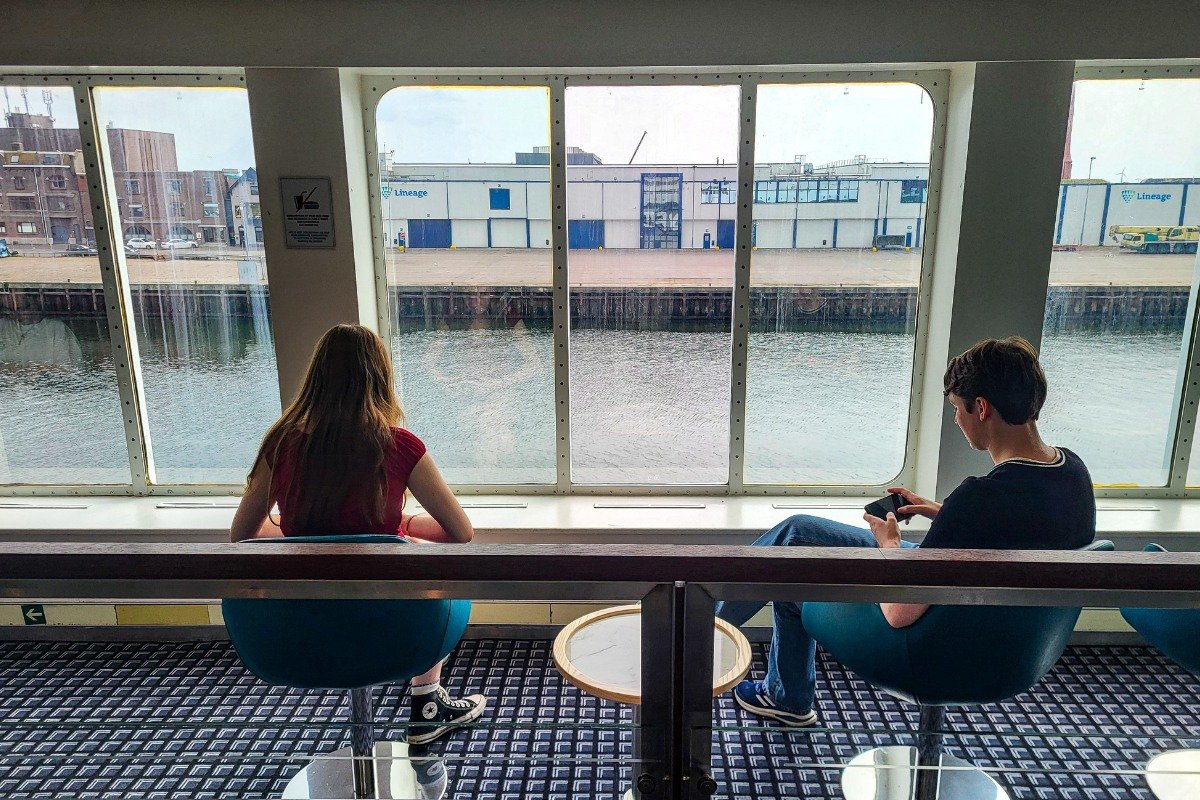
You have likely heard that “looking at the horizon helps.” This is true, but with a caveat: do not stare intently. You need to glance at the horizon naturally to help your brain calibrate, avoiding over-focusing on a single point. Since you generally cannot see the horizon from the windowless center of a lower deck, a side-window seat in the middle of the ship is often the “sweet spot.” Avoid the very front windows, as the upward and downward motion there is most extreme.
Check the featured image of this post to see the ideal zones. The bottom-floor seats highlighted in green are your best bet for a stable ride.
The hidden risk of “sympathetic” seasickness
Be aware that the “stable” areas of a ship often attract other passengers who are prone to illness. Sitting near someone who is already seasick can increase your own chances of feeling unwell. The sights, sounds, and odors of someone experiencing nausea can trigger a sympathetic response in your own body. If you notice a neighbour struggling, it is best to move quickly and respectfully to a different area.
How to prepare before your ferry trip
The most effective way to fight seasickness is to start your defence before the ship leaves the dock. Here are 15+ proven tips to keep you nausea-free:
- Sleep through the crossing: If the schedule allows, try to nap. Use noise-cancelling headphones and an eye mask to block out sensory triggers.
- Seek fresh air: A cool breeze on your face can do wonders. Only move to the outer decks if it is safe and permitted by the crew.
- Watch your diet: Avoid alcohol and heavy, greasy, or spicy meals at least 24 hours before the trip. A relaxed stomach is a resilient stomach.
- The wristband debate: While many use acupressure bands, their effectiveness is scientifically debated. However, the placebo effect or a standard tight wristband can offer comfort for some.
- Stay low and central: Lower decks = less tilt. Center of the ship = less bounce.
- Calibrate with the horizon: If you feel “the sway,” look out a side window at the horizon. If you cannot see outside, keep your eyes closed to stop the conflicting visual data.
- Trust in ginger: Mythbusters confirmed that ginger pills can be more effective than some pharmaceutical placebos.(Mythbusters: Ginger Pill)) It is a clinically backed way to soothe the digestive system.((Ginger to prevent motion sickness – Pubmed))
- Avoid strong odours: Stay away from the galley (food smells), diesel fumes, or passengers with heavy perfume.
- Stay hydrated and cool: Overheating is a major trigger of nausea. Sip cool water constantly, especially on tropical routes.
- Put down the book: Avoid reading or staring at your phone/camera. Your brain needs to think the environment is moving, not that the “stable” book in your hand is the reality.
- The Captain's Tip: Stick to warm drinks and small, light snacks if you must eat.
- Avoid “The Contagion”: If someone nearby gets sick, move immediately. Seasickness is psychologically contagious.
- Check the swell: Use apps like Windy or MarineWeather to check wave heights. If a “wild sea” is predicted, you may want to reconsider your travel timing.
- Medication (The Last Resort): Dimenhydrinate (Dramamine) or Meclizine (Bonine) work well but can cause drowsiness. Take them 30–60 minutes before boarding.
- Patches: Scopolamine patches are highly effective for long hauls but require a prescription in many regions.
- Face forward: Always sit facing the direction of travel. Never sit backwards.
- Bring your own supplies: Pack a few “sick bags” from home so you aren't scrambling to find one during a rough patch.
Natural remedies that actually work
If you prefer to avoid pharmaceuticals, three natural staples should be in your bag. Together, these can mitigate up to 80% of mild symptoms:
- Ginger: Whether in capsules, tea, or crystallised candy, ginger is the gold standard for anti-nausea.
- Peppermint: Peppermint tea or essential oil can calm stomach spasms and provide a refreshing sensory distraction from diesel fumes.
- Acupressure: Stimulating the P6 (Neiguan) point on the inner wrist is a traditional method to block nausea signals.
What to do when you feel it coming on
If the cold sweat starts, act fast: Get to fresh air immediately. Sip water, take a ginger candy, and try to find a spot to lie down and close your eyes. The sooner you react, the easier it is to “reset” your equilibrium.
Conclusion: Sailing smoothly
You aren't the first (or the last) person to battle the waves. While some routes are notoriously rough, like crossing the Bass Strait to Tasmania, most ferry trips are manageable with a bit of foresight. By picking the right seat and prepping your stomach, you can spend your time enjoying the view rather than the bathroom tiles. Fair winds and smooth sailing!